If you have ever watched afternoon light move across Lake Havasu, you already understand the appeal of a metallic floor. Instead of a flat color, the surface has depth. Swirls and drifts of reflective pigment seem to move as you walk across the room, and the floor looks different at noon than it does at sunset.
Metallic epoxy is the most artistic coating we install. It is also the one that most rewards careful planning, because every floor forms its own pattern as it cures and because Havasu heat makes the pour more demanding. This page covers how it works, where it makes sense, the palettes our clients love and what you should know before you choose it.
How a metallic floor gets its look
Metallic pigments are tiny flakes of mica coated with metal oxides. Mixed into clear epoxy, they float and reflect light. When the resin is poured and spread, the installer moves those pigments around with rollers, trowels, brushes and sometimes a light mist of solvent, pushing them into veins, ripples or soft clouds.
The pattern does not stop there. As the resin levels itself out, the pigments keep shifting slightly before the floor sets. That is why every metallic floor is unique, and why the finished result has a three-dimensional look that a painted surface cannot copy.
The background matters as much as the pigment. A tinted base coat underneath sets the overall tone, much like the lake bed shows through shallow water. A dark base makes silver and pearl pop; a light base gives a soft, airy effect.
Palettes inspired by the lake
Any combination is possible, but these four palettes come up again and again in Havasu homes and businesses.
Lake blue
Deep blue and aqua pigments over a dark base, with silver highlights. Dramatic in a game room or bar.
Pearl shore
Pearl white and soft silver over a light grey base. Bright, airy and calm in a living area.
Sunset copper
Copper, bronze and gold, inspired by the evening glow on the mountains across the water.
Driftwood
Warm greys and taupe with subtle silver movement. Neutral enough to sit with any decor.
Where metallic floors work best
The pour, step by step
Design session. We look at photos you like, talk about palette and movement, and bring sample boards. We are honest about what is realistic.
Flatten the slab. Metallic resin shows every dip and patch line. We grind the slab flat and fill low spots carefully.
Prime and tint. A primer seals the concrete. Then a tinted base coat sets the background color.
Pour and work the metallic layer. The pigmented resin is mixed, poured and worked across the whole floor in one continuous session. This is where the look is created, and it cannot be paused halfway.
Protect it. A clear topcoat in gloss or satin goes on top for scratch resistance and, in sunny rooms, UV protection.

Strengths and trade-offs
Metallic floors are stunning in the right place. Here is a straight look at what they do well and what to plan for.
| Strengths | Plan for | |
|---|---|---|
| Look | Unique depth and movement | Cannot match a sample exactly |
| Cleaning | Seamless and quick to mop | Gloss shows dust and footprints sooner |
| Durability | Tough resin with protective topcoat | Sand and grit wear gloss over time |
| Sun | Beautiful in natural light | Needs a UV-stable topcoat near big windows |
| Repairs | Topcoat can be refreshed | Spot repairs to the pattern are hard to hide |
For most lake houses, the sweet spot is a metallic floor in the main living or entertaining space, with entry mats to catch sand and a satin or textured topcoat if the room opens directly onto the pool deck.

Pouring metallic in Havasu heat
Heat is the biggest challenge for metallic work here. Warm resin cures faster, which shortens the time available to work the pigments, and a hot slab can speed it up even more. A floor that would give an installer a comfortable window in a cool room can start to set too quickly in an un-air-conditioned space in July.
So we control the environment. Interior metallic floors are poured with the air conditioning running and the space at a steady temperature. Materials are kept cool, and the crew size is matched to the floor so the whole pour can be worked continuously.
After installation, the other local factor is sunlight. Lake-view homes often have walls of glass facing the water. We specify UV-stable topcoats in those rooms so the colors stay true.
Why metallic is a job for specialists
Metallic epoxy is the least forgiving coating we install. The pour has to be continuous, the mixing exact and the technique practiced. Roller marks, uneven pigment, seams between batches and dust settling on the wet surface are all permanent. Add Havasu heat, and there is very little room for error. Always ask an installer to show you sample boards and finished metallic floors before you commit.
Caring for a metallic floor
Dust mop often, especially in sandy months, and damp mop with a pH-neutral cleaner. Put felt pads under furniture legs and mats at doors to the patio and garage. Wipe up spills promptly. Avoid harsh chemicals, abrasive pads and dragging heavy objects.
Over the years, the topcoat may lose some shine in busy paths. A light sanding and fresh topcoat brings back the depth without touching the metallic layer underneath.
Pricing a metallic floor
Metallic floors cost more than flake or solid systems because they use more material, more layers and a skilled, uninterrupted pour. Size, how much the slab needs flattening, the number of colors and the type of topcoat all affect the price. We quote each project after seeing the space, and we include sample boards so you know what you are buying.
Is metallic right for you?
Metallic is a great choice if you want a floor that is a design feature, you are comfortable with a unique result rather than an exact match, and the space is indoors or well protected. It is less ideal for working garages full of tools and sand, or for anyone who needs a floor that never shows a footprint. In those cases a flake floor is the more practical choice, and we will tell you so.
Lighting a metallic floor
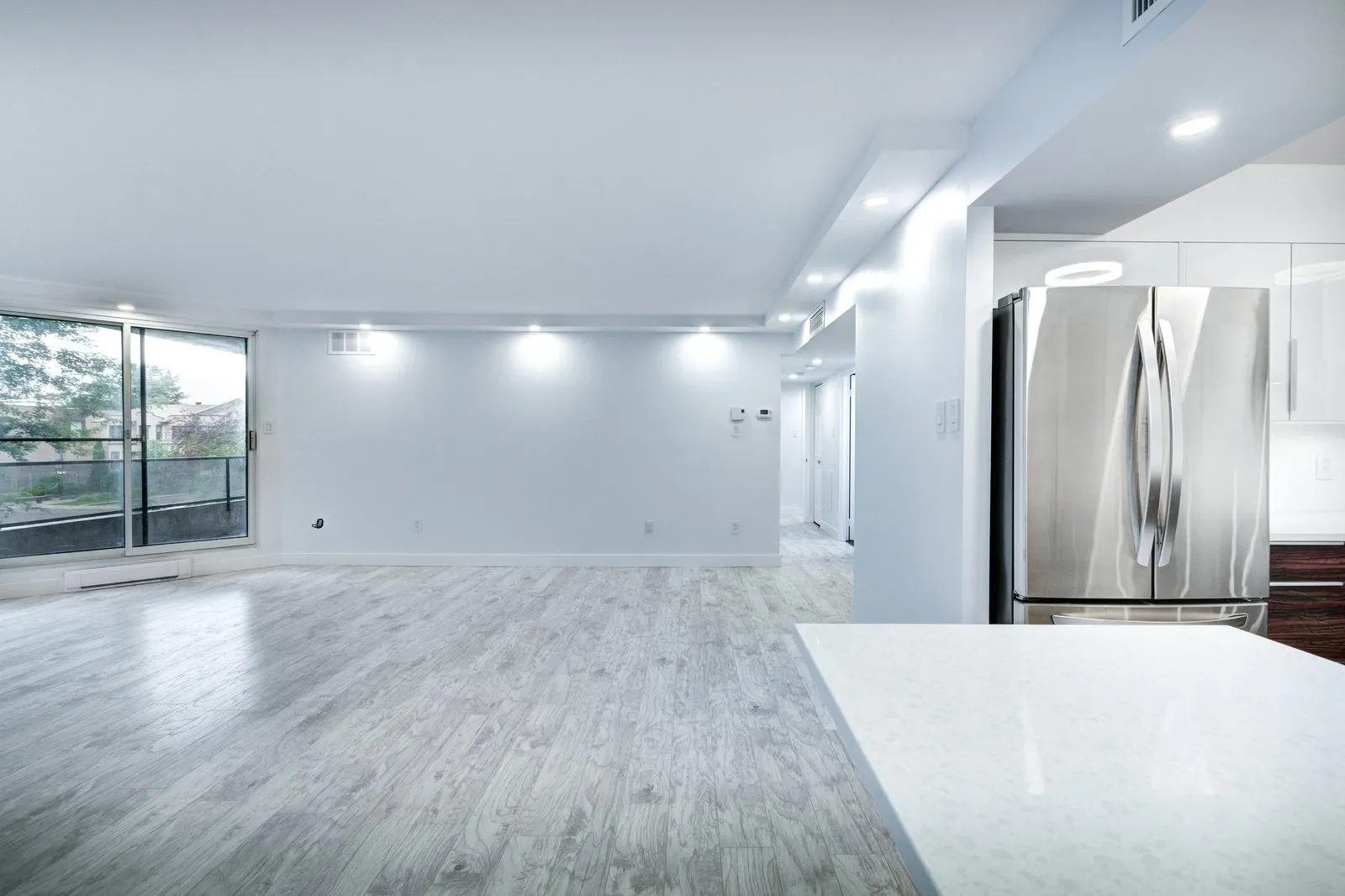
Lighting changes how a metallic floor looks more than any other finish. Natural light from lake-facing windows brings out movement and depth during the day. Warm lamps and recessed lights make copper and bronze glow at night. Cool LED lighting sharpens silver and blue tones. If you are planning lighting changes in the room, tell us, and we can tune the palette so the floor looks its best in the light it will actually live in.