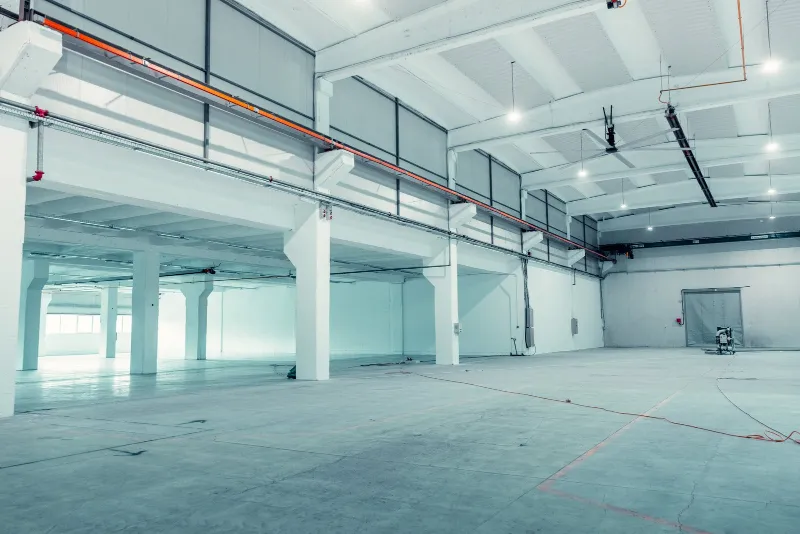
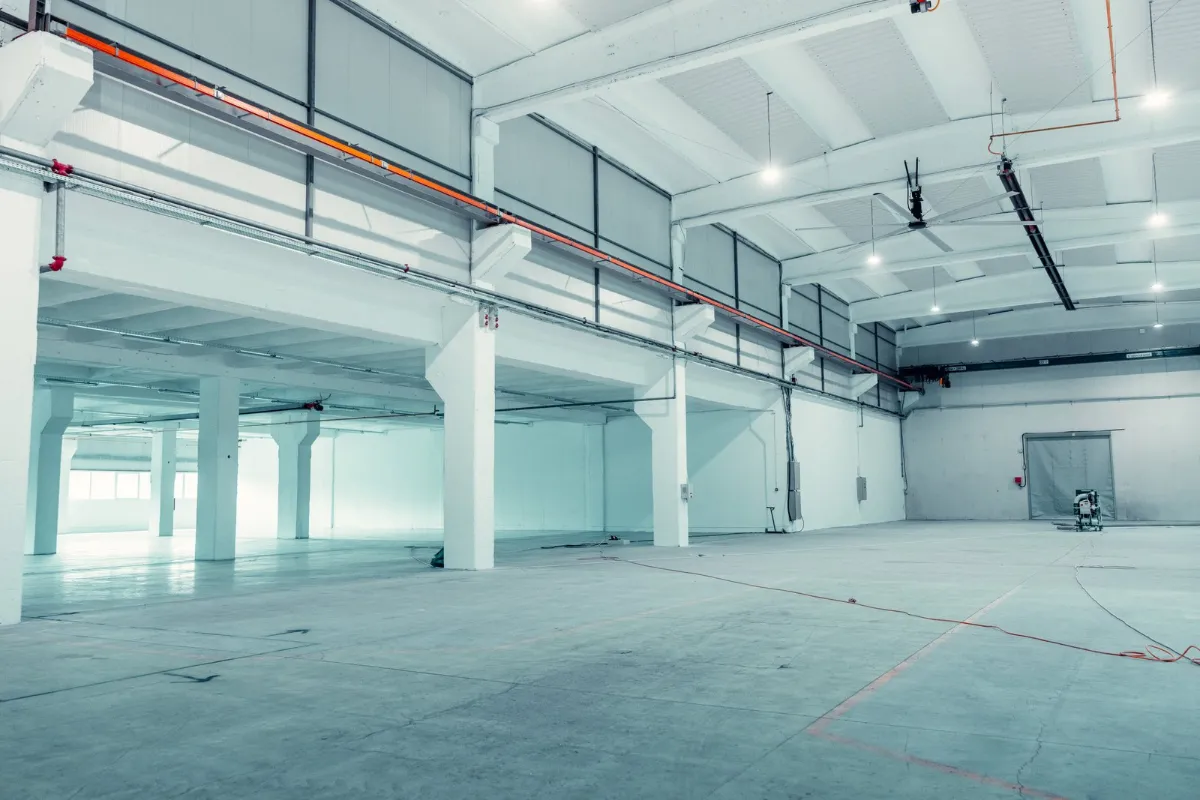
Industrial work in Lake Havasu City has its own flavor. Boat building and marine services are a big part of the local economy, storage facilities for RVs and boats fill the outskirts of town, and warehouses and fabrication shops support everything else. All of them share hard-working concrete floors that see heavy loads, constant traffic and serious heat.
Uncoated, those floors shed dust onto products and equipment, absorb fuel and oil, wear down in drive lanes and crack at the joints. A coating program solves those problems and makes the space brighter, cleaner and safer. Here is how we approach industrial floors in Havasu.
Facilities we coat
Why coat an industrial floor?
Dust control. Bare concrete constantly sheds fine dust as wheels and feet wear the surface. A sealed floor stops it, protecting products, equipment and air filters.
Durability. High-build coatings take the abrasion that would otherwise wear down drive lanes and loading areas.
Easy cleanup. Fuel, oil, resin drips and fluids stay on the surface where they can be cleaned up.
Brighter space. Light-colored coatings reflect overhead light, improving visibility and making the building feel cleaner.
Organization and safety. Striping and color zones make traffic routes and work areas obvious.
Industrial systems
High-build epoxy
Thick, hard-wearing layers for warehouses and production floors.
Polyurea systems
Flexible and impact-resistant for storage bays and shops. See polyurea coatings.
Urethane cement
For harsh chemicals, heat and washdown in process areas.
Densify and seal
Affordable dust control for low-traffic storage.
RV and boat storage facilities
Storage facilities are a big business in Havasu, and their floors take a particular kind of wear. Heavy RVs and boat trailers roll in and out, sit on jacks for months and drip fluids. Tenants judge a facility partly by how clean and well kept it looks.
A coated floor helps on every front. It resists the point loads of jacks and stands, cleans up easily between tenants and makes units look bright and professional. Many facility owners choose a flexible base with a light gray or tan topcoat, plus striping to mark parking positions and drive aisles.
Joint repair
Look at any well-used warehouse floor and the saw-cut lines will be the most beaten-up part of it. Every trailer wheel and forklift tire bangs across them. We dig out the old filler, rebuild broken edges with repair mortar and refill with a semi-rigid material that supports wheels, so the coating crosses a smooth, solid line instead of a gap.
Striping and safety markings
We lay out and coat:
- Forklift and pedestrian lanes
- Parking positions for RVs, boats and equipment
- Racking and staging zones
- Keep-clear areas at panels, exits and eyewash stations
- Color-coded work zones
Coated markings are part of the floor system and last much longer than paint or tape.
How we coat a working facility
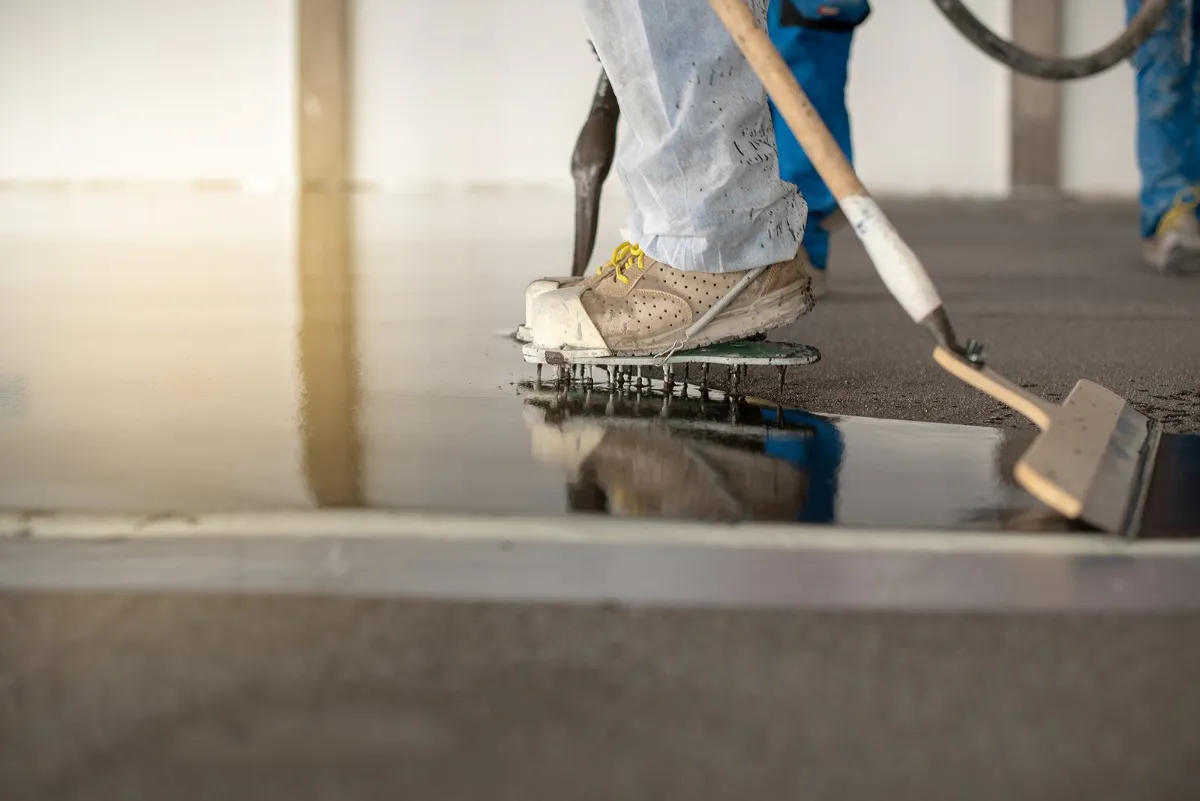
Facility walk
We look at the slab, joints, traffic, chemicals and your operating schedule.
Phased plan
Sections are scheduled so operations continue.
Prep
Heavy grinding with dust collection, joint and crack repair.
Coating
System layers applied section by section.
Striping and handover
Markings added, then a walkthrough with cure times and care tips.

Industrial work in Havasu heat
Many industrial buildings around town are not fully air-conditioned, so interior temperatures in summer can be extreme. Hot slabs shorten working time and can affect how coatings cure. We schedule summer work early in the morning or overnight, keep materials cool and choose systems that handle the conditions.
Big bay doors also bring in sand and dust. We pay extra attention to abrasion resistance and the transition areas near doors where wear is heaviest.
Cost, care and why a specialist matters
Pricing depends on slab condition, system thickness, joint work, access around racking or stored vehicles, phasing and striping. We itemize everything so you can put heavier systems where they matter most.
Maintenance is straightforward: regular sweeping or scrubbing with neutral cleaners and periodic checks of high-wear lanes. Catching thin spots early means a simple recoat.
Industrial floors are big, busy and often contaminated with oil or old coatings. Doing them well takes heavy equipment, product knowledge and careful planning.
Marine manufacturing floors
Boat building is hard on floors. Gelcoat and resin drips, solvents, fiberglass dust, heavy molds and hulls on stands all take a toll, and a damaged floor can contaminate finishes and slow production.
For production areas, we look for systems with strong chemical resistance and a surface that lets drips be scraped or wiped off without lifting the coating. Lighter colors help workers spot drips and debris quickly. Texture is set for safe footing without trapping dust. In finishing and assembly areas, a smoother, brighter floor helps keep the space clean.
We also plan around production. Sections can be coated during scheduled shutdowns or over weekends so lines keep running.
Self-storage: floors that help units rent
Storage tenants judge a facility quickly. A bright, clean unit with a sealed floor feels more secure and better kept than one with dusty, stained concrete. Coated floors also make turnovers faster, since the floor can be swept and mopped instead of scrubbed.
For self-storage, a cost-effective approach is often a densifier and sealer in standard units, with full coatings in climate-controlled units, RV bays and high-visibility areas like the office and hallways.
Sealer or full coating?
Not every industrial space needs the same treatment. Here is a quick guide.
| Situation | Densifier and sealer | Full coating system |
|---|---|---|
| Main goal | Dust control on a budget | Durability, cleanability and markings |
| Traffic | Light foot and cart traffic | Forklifts, trailers, heavy loads |
| Spills | Occasional | Regular fuel, oil or chemicals |
| Look | Natural concrete with sheen | Uniform color with striping |
| Typical spaces | Dry storage units | Shops, bays, production floors |
Picking floor colors for a working building
In an industrial building, the floor color affects how bright the space feels, how easy spills are to see and how quickly the floor looks dirty. Pale grey and light tan floors bounce the most light around and make drips obvious, which keeps clean-up quick. Medium greys disguise tire scuffing between scrubs. In a marine shop, a light floor makes resin drips and dropped fasteners easy to spot.
We usually suggest one main field color plus a short list of accent colors used only for safety lanes, parking positions and work zones, so the markings stay meaningful.
Planning around stored vehicles and inventory
Few Havasu facilities can empty out entirely. Storage operators have tenants' RVs and boats in place, and warehouses have stock on racks. We map the building into sections, agree on the order and plan where vehicles or inventory will sit while each part is prepped and coated. Fast-curing systems shorten each phase, and barriers keep traffic off fresh coatings until they are ready.